HelpContact UsView shopping cart
Items in cart: 0
home food store cookware cookbooks fruit carving recipes
Visit our Thai Food store for Thai recipe ingredients
Bookmark and Share

Fruit Carving Knives

These vegetable and fruit carving knives are imported from Thailand. Manufactured by the highly esteemed Kiwi/Kom Kom knife company, these knives are top quality and reasonably priced. Amateurs and professionals will both appreciate having a wide range of carving tools when creating your next masterpiece.

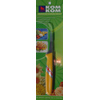
Bird's Beak Fruit Carving KnifeBird's Beak Fruit Carving Knife, 002

$8.95    Qty:

Also known as tourne knives, bird's beak knives are often used interchangeably with paring knives whilst working on fruit and vegetable carvings. Due to its unique shape, the bird's beak knife is also a very handy kitchen tool for improvised garnishing.

The bird's beak fruit carving knife (Kom-Kom #002A) is perhaps the most important knife in any fruit carver's armory. The blade is two inches long with a solid plastic handle. The stubby shape of the blade is absolutely ideal for both simple tornee cuts as well as for carving more intricate designs, especially those inspired by traditional Thai artwork. The size of the knife ensures that the carver can get his/her hands close to the design whilst keeping the knife steady and avoiding irritating mistakes. Using longer knives with straight spines can often result in grazing finished areas of patterning. Bird's beak knives are designed to aid precision, prevent accidents, and heal blemishes.

To offer an example of a bird's beak knife in application, consider the carving of petals when working on a pumpkin. Even though the flesh of the pumpkin is reasonably solid to work with, carved flower petals are still comparatively weak and difficult to repair. The bird's break makes short work of carving the underside of the petal without needing to rely too heavily upon keeping a perfectly steady hand. Likewise, when working between petals and texturing, the birds beak is light enough to drag softly over and around the flowers without breaking the flesh.

This knife is also available as part of our: 11 piece knife set and our 3 piece knife set.

Kom-Kom knives are produced to an exceedingly high standard, boasting superior specifications to their cheaper selling variant, Kiwi. Known by reputation to be the very best knives that Thailand has to offer, Kom-kom's designs are both attractive and practically suited for everyday use. Their stainless steel blades consist of a dense carbon alloy that is first heat treated and then carefully tempered to ensure long-lasting sharpness and unrivaled durability.

Product Features

  • Authentic Kom-Kom knife imported from Thailand
  • The single most important fruit carving knife of all
  • Carve in close proximity for working in detail
  • High-quality hardened stainless steel blade
  • Well balanced with dishwasher-safe plastic handle


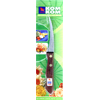
Bird's Beak Fruit Carving KnifeBird's Beak Fruit Carving Knife, Wooden Handle, 003

$14.95    Qty:

Also known as tourne knives, bird's beak knives are often used interchangeably with paring knives whilst working on fruit and vegetable carvings. Due to its unique shape, the bird's beak knife is also a very handy kitchen tool for improvised garnishing.

The bird's beak fruit carving knife (Kom-Kom #003) is perhaps the most important knife in any fruit carver's armory. The blade is two inches long with a solid, double-riveted wooden handle. The stubby shape of the blade is absolutely ideal for both simple tornee cuts as well as for carving more intricate designs, especially those inspired by traditional Thai artwork. The size of the knife ensures that the carver can get his/her hands close to the design whilst keeping the knife steady and avoiding irritating mistakes. Using longer knives with straight spines can often result in grazing finished areas of patterning. Bird's beak knives are designed to aid precision, prevent accidents, and heal blemishes.

To offer an example of a bird's beak knife in application, consider the carving of petals when working on a pumpkin. Even though the flesh of the pumpkin is reasonably solid to work with, carved flower petals are still comparatively weak and difficult to repair. The bird's break makes short work of carving the underside of the petal without needing to rely too heavily upon keeping a perfectly steady hand. Likewise, when working between petals and texturing, the birds beak is light enough to drag softly over and around the flowers without breaking the flesh.

This knife is also available as part of our: 11 piece knife set and our 3 piece knife set.

Kom-Kom knives are produced to an exceedingly high standard, boasting superior specifications to their cheaper selling variant, Kiwi. Known by reputation to be the very best knives that Thailand has to offer, Kom-kom's designs are both attractive and practically suited for everyday use. Their stainless steel blades consist of a dense carbon alloy that is first heat treated and then carefully tempered to ensure long-lasting sharpness and unrivaled durability.

Product Features

  • Authentic Kom-Kom knife imported from Thailand
  • The single most important fruit carving knife of all
  • Carve in close proximity for working in detail
  • High-quality hardened stainless steel blade
  • Well balanced with double-riveted fine wooden handle


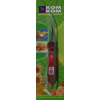
Fruit Carving Seeding KnifeFruit Carving Seeding Knife, 001B

$6.95    Qty:

The three inch seeding knife is an odd yet extremely useful knife. One of the three most essential fruit carving knives, seeding knives are designed to make difficult tasks easy.

Often referred to as a 'curved carving knife', this seeding knife (Kom-Kom #001B) has a long blade that is primarily suited for removing seeds, carving in "tricky areas", and preparing fruits and vegetables in a similar way to a paring knife. Of the two seeding knives that Kom-Kom produces, this is the only one with an easy-to-clean plastic handle. Perhaps the oddest of the three most commonly used fruit carving knives, the usefulness of the seeding knife isn't plainly apparent until appreciated in context. Consider the way a painter uses the hard pointed end of a paintbrush to remove debris from of a painting; seeding knives work in very much the same way. Like an extended claw, the seeding knife can be used to target difficult-to-reach areas of a carving in order to make the necessary cuts or carry out the reparations required. If carving a container out of melon, for example, the seeding knife is ideal for fishing out instrusive loose pieces and for making sure that the deep inner corners of the vessel are sharp and well defined.

This blade is one of the three absolutely essential fruit carving knives required to follow the instructions in our vegetable and fruit carving books as well as those featured in our own fruit carving guides

Kom-Kom knives are produced to an exceedingly high standard, boasting superior specifications to their less expensive Kiwi brand. Known by reputation to be the very best knives that Thailand has to offer, Kom-Kom's designs are both attractive and practically suited for everyday use. Their stainless steel blades consist of a dense carbon alloy that is first heat treated and then carefully tempered to ensure long-lasting sharpness and unrivaled durability.

This knife also available as part of our: 11 piece knife set and our 3 piece knife set.

Product Features

  • Authentic Kom-Kom knife imported from Thailand
  • One of the three essential fruit carving knives
  • Carve in tricky areas that other knives can't reach
  • High-quality hardened stainless steel blade
  • Well balanced with dishwasher-safe plastic handle


Curved Blade Fruit Carving KnifeCurved Blade Fruit Carving Knife, Wooden Handle, 001A

$11.95    Qty:

The three inch seeding knife is an odd yet extremely useful knife. One of the three most essential fruit carving knives, seeding knives are designed to make difficult tasks easy.

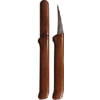
Often referred to as a 'curved carving knife', this seeding knife (Kom-Kom #001A) has a long blade that is primarily suited for removing seeds, carving in "tricky areas", and preparing fruits and vegetables in a similar way to a paring knife. Of the two seeding knives that Kom-Kom produces, this is the only one with a fine double-riveted wooden handle. Perhaps the oddest of the three most commonly used fruit carving knives, the usefulness of the seeding knife isn't plainly apparent until appreciated in context. Consider the way a painter uses the hard pointed end of a paintbrush to remove debris from of a painting; seeding knives work in very much the same way. Like an extended claw, the seeding knife can be used to target difficult-to-reach areas of a carving in order to make the necessary cuts or carry out the reparations required. If carving a container out of melon, for example, the seeding knife is ideal for fishing out instrusive insects and for making sure that the deep inner corners of the vessel are sharp and well defined.

This blade is one of the three absolutely essential fruit carving knives required to follow the instructions in our vegetable and fruit carving books as well as those featured in our own fruit carving guides

Kom-Kom knives are produced to an exceedingly high standard, boasting superior specifications to their cheaper selling variant, Kiwi. Known by reputation to be the very best knives that Thailand has to offer, Kom-kom's designs are both attractive and practically suited for everyday use. Their stainless steel blades consist of a dense carbon alloy that is first heat treated and then carefully tempered to ensure long-lasting sharpness and unrivaled durability.

This knife also available as part of our: 11 piece knife set and our 3 piece knife set.

Product Features

  • Authentic Kom-Kom knife imported from Thailand
  • One of the three essential fruit carving knives
  • Carve in tricky areas that other knives can't reach
  • High-quality hardened stainless steel blade
  • Well balanced with double-riveted fine wooden handle


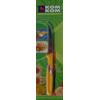
Decorating Waving KnifeDecorating Waving Knife, 011

$14.95    Qty:

This wavy edged decoration knife (Kom-kom #011) has a long, undulated pattern for cutting large fruits and vegetables into simple yet attractive garnishes. Often used in Thailand for deserts and fruit carving displays, the large decoration knife is an essential item for cooks who plan on working with large fruits and vegetables such as pumpkins, guavas, and cucumbers.

With a five and a half inch rectangular blade, the large decoration knife is the the most sizeable of its kind to be produced by Kom-Kom. It is equipped with a plastic handle and is thus easy to clean and dishwasher safe. Large fruits such as watermelons tend to be very messy to work with and so in this case an easy-to-clean handle is a more important property than usual.

Kom-Kom knives are produced to an exceedingly high standard, boasting superior specifications to their cheaper selling variant, Kiwi. Known by reputation to be the very best knives that Thailand has to offer, Kom-kom's designs are both attractive and practically suited for everyday use. Their stainless steel blades consist of a dense carbon alloy that is first heat treated and then carefully tempered to ensure long-lasting sharpness and unrivaled durability.

Product Features

  • Authentic Kom-Kom knife imported from Thailand
  • Ideal for large buffets and prestigious occasions
  • Useful decorating and adorning fruit carvings
  • High-quality hardened stainless steel blade
  • Well balanced with dishwasher-safe plastic handle


Set: 8Set: Two 8" Knives, Kom Kom

$30.00    Qty:

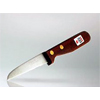
Kom-Kom's chef knives are now spectacularly popular in Thailand. Designed as all-purpose blades, both of the stainless steel blades in Kom-Kom's chef knife set are seven and a half inches long with double-riveted wooden handles. Though these knives are often used interchangeably in busy Thai kitchens, the rectangular blade chef's knife (Kom-Kom #22) is essentially better suited for cutting pork and beef whilst the Thai chef's knife (Kom-Kom #21) is particularly good for slicing large quantities of vegetables and for working with poultry.

The designs of both knives are heavily influenced by Japanese Santoku and Usuba knives (which can now commonly be seen in large commercial areas in Bangkok and Chiang Mai). Both knives are considerably lighter than Western equivalents due to the different requirements of Asian cuisine. Even though each of these knives were designed with different purposes in mind there are no strict rules when it comes to chefs knives; the uses of each depend largely upon the personal preferences of the chef.

Kom-Kom knives are produced to an exceedingly high standard, boasting superior specifications to their cheaper selling variant, Kiwi. Known by reputation to be the very best knives that Thailand has to offer, Kom-kom's designs are both attractive and practically suited for everyday use. Their stainless steel blades consist of a dense carbon alloy that is first heat treated and then carefully tempered to ensure long-lasting sharpness and unrivaled durability.

Product Features

  • Authentic Kom-Kom knives imported from Thailand
  • All purpose blades; used for fruit carving and as kitchen knives
  • High-quality hardened stainless steel blades
  • Characteristically Asian design
  • Well balanced with triple-riveted fine wooden handles


Eight Inch Knife, Rectangle Blade8" Knife, Rectangle Blade, #22, Kom Kom

$16.00    Qty:

Like all chef's knives, the rectangular chef's knife (Kom-Kom #22) is an evolution of the butcher's knife, which is also very popular in Thailand. Designed as an all-purpose blade, the blade is approximately eight inches long and about two and a half inches wide. Unlike the closely related Kom-Kom Thai chef's knife, the #22's edge is perfectly flat except for a slight curve towards the tip. Amongst its many uses, the Thai chef's knife is primarily intended for executing common tasks such mincing, slicing, chopping vegetables, slicing meat, and disjointing large cuts of beef or pork. However, the #22 is perhaps better suited than the Thai chef's knife for cutting hard vegetables and sturdier types of bone found in pork and beef. Ultimately, there are no strict rules when it comes to chefs knives; the uses of each depend largely upon the personal preferences of the chef. Some fruit and vegetable carvers also prefer to use chef's knives in addition to (or in replacement of) paring knives.

Unlike chef's knives designed in the West, Kom-Kom drew some of its inspiration from the Japanese usuba knife. Bearing certain similarities to a butcher's knife, Kyoto usuba knives are much thinner and intended mainly for cutting a wide range of vegetables. The Eastern preference for lighter knives is mainly due to the need for accommodating different types of cuisine.

Kom-Kom knives are produced to an exceedingly high standard, boasting superior specifications to their cheaper selling variant, Kiwi. Known by reputation to be the very best knives that Thailand has to offer, Kom-kom's designs are both attractive and practically suited for everyday use. Their stainless steel blades consist of a dense carbon alloy that is first heat treated and then carefully tempered to ensure long-lasting sharpness and unrivaled durability.

Product Features

  • Authentic Kom-Kom knives imported from Thailand
  • All purpose blade; used for cooking as well as fruit carving
  • High-quality hardened stainless steel blades
  • Characteristically Asian design
  • Well balanced with triple-riveted fine wooden handle


88" Chefs Knife, #21, Kom Kom

OUT OF STOCK

Well known to be one of the most important assets of a Thai kitchen, the Thai chef's knife is light, versatile, and slightly curved towards the tip.

Like all chef's knives, the Thai chef's knife (Kom-Kom #21) is an evolution of the butcher's knife, which is also very popular in Thailand. Designed as an all-purpose blade, the blade is approximately eight inches long and about two and a half inches wide. Unlike the closely related rectangular Kom-Kom chef's knife, the #21's edge is slightly curved towards the tip, enabling the chef to chop easily with the heel of the blade. Amongst its many uses, the Thai chef's knife is primarily intended for executing common tasks such mincing, slicing, chopping vegetables, slicing meat, and disjointing large cuts of beef or pork. Some fruit and vegetable carvers also prefer to use chef's knives in addition to (or in replacement of) paring knives.

Unlike chef's knives designed in the West, Kom-Kom is much more heavily influenced by the Japanese Santoku knife which is lighter, thinner, and ever so slightly shorter than Western equivalents (the Kom-Kom #21 is about half an inch shorter than most Western chef's knives). The Eastern preference for lighter knives is mainly due to the need for accommodating different types of cuisine. Like the Santoku, Kom-Kom's #21 is primarily designed for cutting fish, vegetables, and more lightly boned meats such as chicken. Clean cuts of beef and pork are rarely used in Thai cooking and therefore there is no need for a closer resemblance to the knife's antecessor.

Kom-Kom knives are produced to an exceedingly high standard, boasting superior specifications to their cheaper selling variant, Kiwi. Known by reputation to be the very best knives that Thailand has to offer, Kom-kom's designs are both attractive and practically suited for everyday use. Their stainless steel blades consist of a dense carbon alloy that is first heat treated and then carefully tempered to ensure long-lasting sharpness and unrivaled durability.

Product Features

  • Authentic Kom-Kom knives imported from Thailand
  • All purpose blade; used for cooking as well as fruit carving
  • High-quality hardened stainless steel blades
  • Characteristically Asian design
  • Well balanced with triple-riveted fine wooden handle

Complete Carving Knife Set
Also see our complete sets of carving books and tools.


Connect with us for exclusive discounts and recipes or download our iPhone recipe app!

  • Follow us on Facebook
  • Follow us on Twitter
  • Templ of Thai iPhone Recipe App
News:
Bookmark and Share